

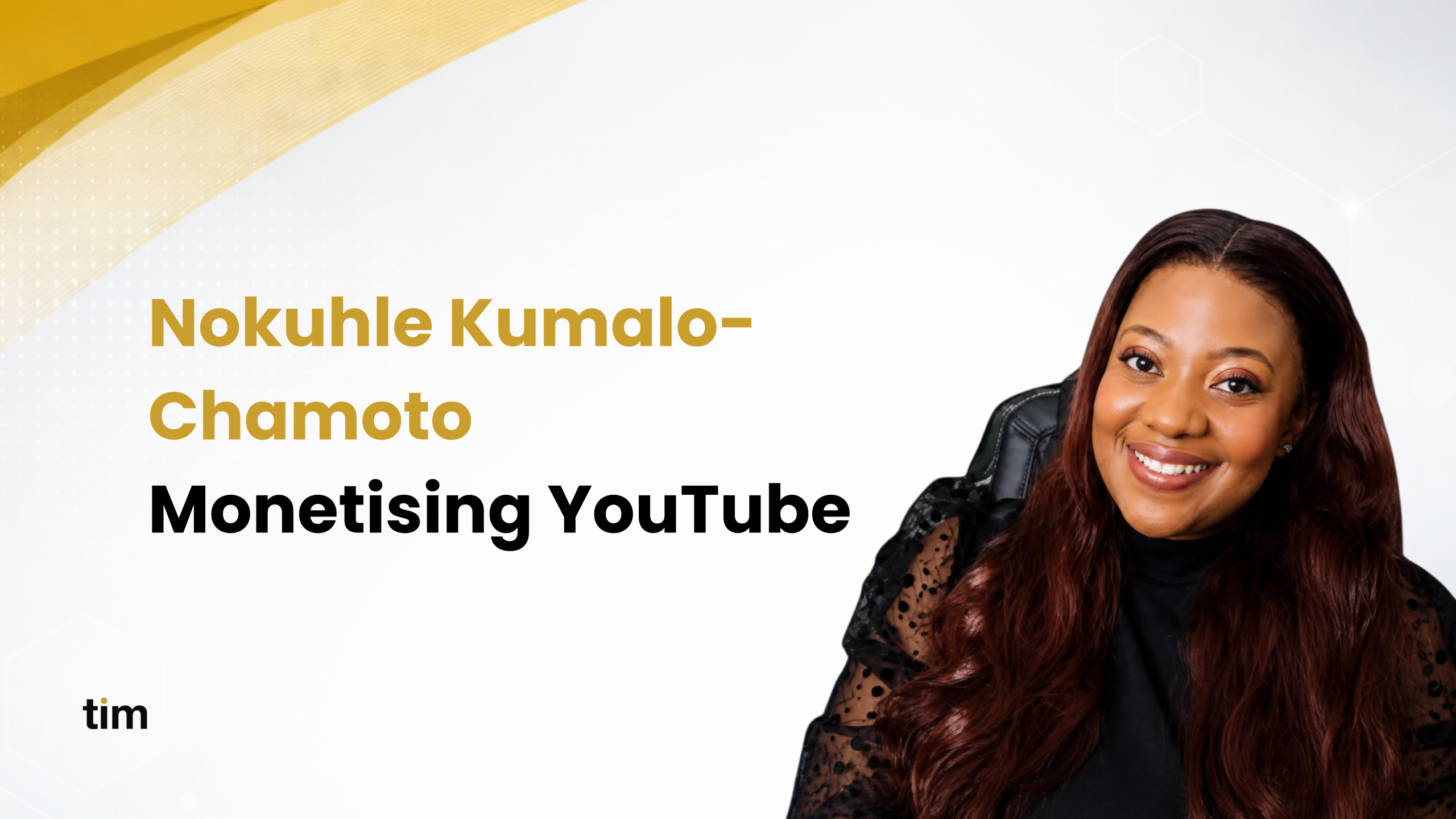
On 31 March 2026, Tim Africa completed the Monetising YouTube Heavy Chef Recipe session featuring Nokuhle Khumalo Chamoto, a chartered accountant, financial educator, content creator, speaker, author, and YouTuber.
One of our team members, Khethelo Ntombela, captured key insights that entrepreneurs, marketers, creators and business owners can apply when using YouTube to build trust, grow a community, and create new income opportunities.
The session explored YouTube monetisation, content strategy, community building, storytelling, consistency, and the practical realities of becoming a creator. It wasn’t only about making money from YouTube, but about using content to create value, build credibility, and open new doors for your business.
Meet the Chef: Nokuhle Khumalo Chamoto
How Heavy Chef describes her
Nokuhle is a Chartered Accountant (SA), financial educator, speaker, content creator, and author dedicated to helping young professionals navigate money, mindset, and modern adulthood. She is the founder of Lomaku, a multimedia platform offering financial literacy, career coaching, and personal development. With over 140,000 YouTube subscribers, she makes finance accessible and engaging. Nokuhle authored GRWM: Work Edition and Boss Your Money: Learn the Wealth Creation Formula.
How Tim describes her
From Tim Africa’s perspective, Nokuhle is an incredible machine because she has turned practical knowledge into accessible education. Her journey shows how creators can use content not just to be seen, but to help people make better decisions.
For entrepreneurs and marketers, her message is especially relevant. YouTube isn’t just a place to upload videos. It can become a trust-building platform, a research tool, a community space, and not a long-term growth engine.


Unpacking the Ingredients of the Recipe
1. Start by answering real questions
“YouTube was just meant to be a visual diary for me.”
Nokuhle didn’t start YouTube with a full business plan. She started by documenting her life and answering questions people around her were already asking.
Her channel began to grow when she spoke about practical finance topics such as buying a car, investing, and filing taxes. These weren’t abstract ideas. They were real questions from people entering adulthood and trying to make better money decisions.
For businesses, this is an important reminder. Content doesn’t always need to start with a campaign idea. Sometimes the strongest content starts with a customer question.
2. Do not chase subscribers for the sake of it
“Just create content that people find useful. They will subscribe naturally.”
One of Nokuhle’s clearest points was that subscribers aren’t the full picture. While they matter to reach the YouTube monetization threshold, they don't automatically determine how much money a creator makes.
She explained that only a portion of her viewers are actually subscribed to her channel. Many people arrive, watch what they need, and leave. That doesn’t make the content unsuccessful.
For marketers and creators, this shifts the focus away from vanity metrics. The real question is whether people are watching, staying, and finding enough value to trust you.
3. Watch time matters more than attention-grabbing numbers
“The big thing is views. Do people watch your content? And for how long do they watch your content?”
Nokuhle explained that YouTube monetization is not only about reaching 1,000 subscribers. Creators also need watch hours, which can take much longer to build.
This is where content quality becomes important. If people click but leave quickly, the platform receives a signal that the video may not be useful. If people stay, YouTube has more reason to keep showing it to others.
For business owners, the lesson is simple. It is not enough to get attention. Your content needs to hold attention by being useful, clear and relevant.
4. Use a story to make your business memorable
“People buy stories, people buy people.”
For entrepreneurs using YouTube to grow a business, she encouraged a more human approach. A business channel doesn’t have to feel stiff or overly serious. It can show the process, the people behind the process, and the story that makes the brand worth remembering.
This could mean showing how something is made, how it’s delivered or what happens behind the scenes. The important part is to make the content feel real.

5. Hook people early, but do not mislead them
Nokuhle spoke about the importance of giving viewers a reason to stay. One practical way to do this is to show a strong preview at the beginning of the video.
This could be a “coming up” moment, a strong statement or a glimpse of the most useful part of the video. The goal is to make the viewer curious enough to continue watching.
However, she also warned against clickbait. A strong hook should be honest. If the video promises one thing and delivers something else, it damages trust.
6. Make your content easy to find
Nokuhle reminded creators to think like viewers when writing titles. A business owner may know the technical language around a topic, but the audience may not search that way.
The same applies to thumbnails. Nokuhle encouraged creators not to rely on random auto-generated thumbnails. A good thumbnail tells the viewer that care has gone into the content before they even press the play button.
7. Start with what you have
“Start with whatever you have.”
Nokuhle was direct about equipment. Waiting for the perfect gear can become a way to delay starting. She began with the phone she had, natural lighting and free or accessible editing tools. Her advice was practical: wipe your camera, use the light available to you, and don’t spend money before the channel has made money.
This is an important lesson for entrepreneurs, too. The first version doesn’t need to be perfect. It needs to exist, teach you something, and give you something to improve.
8. Build community before selling
“People really miss the element of connecting with other people.”
Nokuhle explained that YouTube helped her understand what people needed. Through comments, questions, and conversations with her audience, she noticed gaps that later informed her services.
This is where content becomes more than marketing. It becomes research. It helps businesses understand what people are struggling with, what they value, and what they're willing to ask for help with.
For brands, the opportunity is to stop treating content as a one-way broadcast but use it as a way to listen, build trust and shape better products or services.

Tim Africa’s Perspective on Nokuhle Khumalo Chamoto
The biggest lesson from Nokuhle’s session is that YouTube growth isn’t only about posting videos. It's about creating content that answers real questions, earns trust and gives people a reason to keep coming back.
At Tim Africa, this connects closely to the work we do across podcasting, performance marketing, web development. Strong content isn’t just content that looks good. It's content that helps people understand, decide, connect and act.
If you're building a business and want to help turn your purpose into powerful digital content and marketing systems, Tim Africa works with brands every day through podcasting, performance marketing, and web development.
Frequently Asked Questions
1. How can entrepreneurs use YouTube to grow their business?
Entrepreneurs can use YouTube to answer customer questions, show their process, build trust and create a community around their brand. The goal is not only to sell, but to become useful and memorable.
2. What does YouTube monetisation involve?
YouTube monetisation usually involves meeting platform requirements such as subscriber and watch-hour thresholds. However, creators can also earn through brand partnerships, sponsored content, services, products and community-led opportunities.
3. What is Heavy Chef?
Heavy Chef is a learning community for entrepreneurs that shares practical recipes, events and resources from experienced business builders, creators and industry practitioners.