

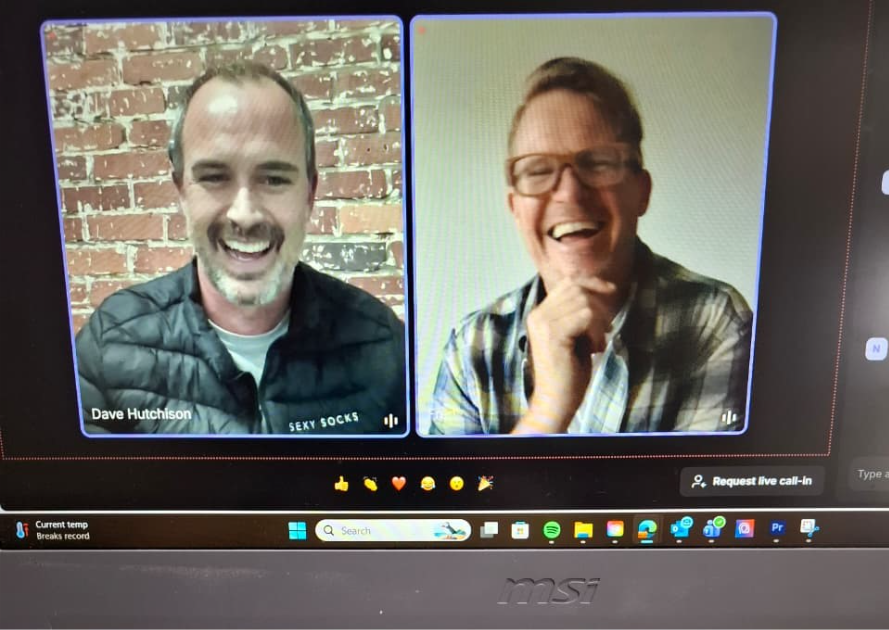
On 16 March 2026, Tim Africa completed the Heavy Chef Social Enterprises recap session featuring Dave Hutchison, founder of Sexy Socks. Dave is a South African entrepreneur recognised for building a purpose-driven business that combines commercial growth with meaningful social impact.
One of our team members, Khethelo Ntombela, captured key insights that entrepreneurs, marketers, and business owners can apply when building brands that stand for more than profit.
The session explored the deeper layers of social enterprise, from storytelling to funding, focus, sustainability, and human impact. It wasn't about building a business that simply looks good from the outside, but more about creating something real and valuable to the communities it serves.
Meet the Chef: Dave Hutchison
How Heavy Chef describes him
Dave Hutchison is a social entrepreneur and founder of Sexy Socks, a purpose-led Cape Town-based brand that donates a pair of school socks to a child in need with every sale.
How Tim describes him
Dave Hutchison is an incredible machine. He represents what it means to build a business that is commercially strong, socially aware, and deeply human. His approach reminds us that purpose is not separate from business strategy; it is part of the machine that keeps the business moving.
Unpacking the Ingredients of the Recipe
1. Build a Business That Means More Than Money
"Your story is a lot cooler than how much money you made last month."
Dave's lesson was clear: the brands of the future cannot only be about making money. People connect with businesses that stand for something, especially when the purpose is built into the business rather than added as an afterthought.
For entrepreneurs, this means asking an important question early on: Does the business have a social angle? If it does, that story can become one of the strongest parts of the brand.
2. Purpose Still Needs Profit
"The metrics are the impact but not the reason."
Purpose does not replace profit. It gives profit direction. Dave spoke about the importance of understanding stockholding, lead time, cash flow, and sales. The numbers help measure the work, but they aren't the deeper purpose behind it.
3. Do Not Take Funding Too Early
"Money makes you stupid."
"If you don't need the money, don't take the money…"
Dave was honest about how difficult the early years were. It took seven long years before Sexy Socks broke through.
When something is born from nothing, it forces the founder to ask difficult questions about the product, the customer, the model, and the future.
His advice is to use your resources first. Look at suppliers. Explore platforms such as BackaBuddy or Kickstarter. Speak to friends and family. Have the difficult conversations first. Build enough proof so that when investors do come, they are backing something real.
4. Work on the Business, Not Just in the Business
"Work on the business, not in the business."
Dave has reached a stage where he has stepped largely away from the day-to-day running of the business. With a strong team in place, he now spends more time thinking about the core pillars of the business and where it can go next.
This is a part of the entrepreneurial mindset. Growth isn't only about doing more every day. It's about creating the space to think more clearly about what the business can become.

5. Avoid Diluting the Brand
"All good is good, we're not taking away from good."
When sales slow down, many businesses panic. The first instinct is often to reduce prices or add more products.
Dave challenged this thinking. Instead of immediately changing the offer, he encouraged entrepreneurs to look at what the business already does well. Sometimes the problem is not the product. The problem is that not enough people have seen it yet.
The lesson is to avoid diluting the brand. Before adding more, ask how you can get the core product in front of more of the right people.
6. Balance Newness with Focus
"There is a level of newness that needs to come about, but it needs to be balanced."
Dave didn't dismiss the importance of newness. In a product-based business, fresh ranges and new ideas matter.
But newness needs to be balanced with focus. The brand already has value in the multiple ranges it offers, so the challenge isn't simply to keep adding. The challenge is to add in a way that strengthens the story.
7. Make Impact Human
"It's not just about keeping little toes warm."
"Representation really matters."
One of the most powerful lessons from Dave's session was that the real impact is human.
Sexy Socks has reached a major milestone in donating socks to schools in need, but Dave made it clear that the school sock is only the driver. The deeper value is connected with the children who receive them.
This is what makes social enterprise meaningful. The number matters, but the human connection behind the number matters more.
8. Small Acts Build Big Change
"Many small acts make a big change."
Dave's approach also showed that big change is often built through small, consistent actions.
Sexy Socks does not treat social media as its primary sales channel. Instead, the brand uses it to help people understand the business. The team also approaches growth with humility. When exploring overseas markets, they went to trade shows not to show off, but to learn and see what was already happening.
That mindset matters. Businesses do not grow only through one big campaign or one breakthrough moment. They grow through repeated acts of learning, listening, showing up, building relationships, and serving customers well.

Tim Africa's Perspective on Dave Hutchison
Dave Hutchison's session is an incredible reminder that social enterprise isn't about looking purposeful; it's about building purpose into the business model. In a world where many brands are trying to stand for something, the real challenge is staying focused, commercially sustainable, and genuinely connected to the people you serve.
If you're building a business and want help turning your purpose into powerful digital content and marketing systems, Tim Africa works with brands every day through podcasting, performance marketing, and web development.
Frequently Asked Questions
- What is a social enterprise?
A social enterprise is a business that uses its products, services, or profits to create a positive social impact. Unlike a traditional charity, it still needs to operate as a sustainable business, but its purpose goes beyond profit. In Dave Hutchison's case, Sexy Socks uses a simple product to support school children in need through its sock donation model.
- Why is brand purpose important?
Brand purpose gives people a reason to connect with a business beyond what it sells. When a brand stands for something clear and meaningful, it becomes easier for customers to understand, remember, and support. Dave Hutchison's story shows that purpose can strengthen a brand when it is built into the business model rather than added as a marketing afterthought.
- How can entrepreneurs build social impact into their business?
Entrepreneurs can build social impact into their business by starting with a clear problem they want to help solve, then aligning that purpose with how the business operates. This could mean supporting a community, creating jobs, giving back through sales, or using the business to encourage positive change. The key is to keep the impact simple, sustainable, and connected to the core product or service.