

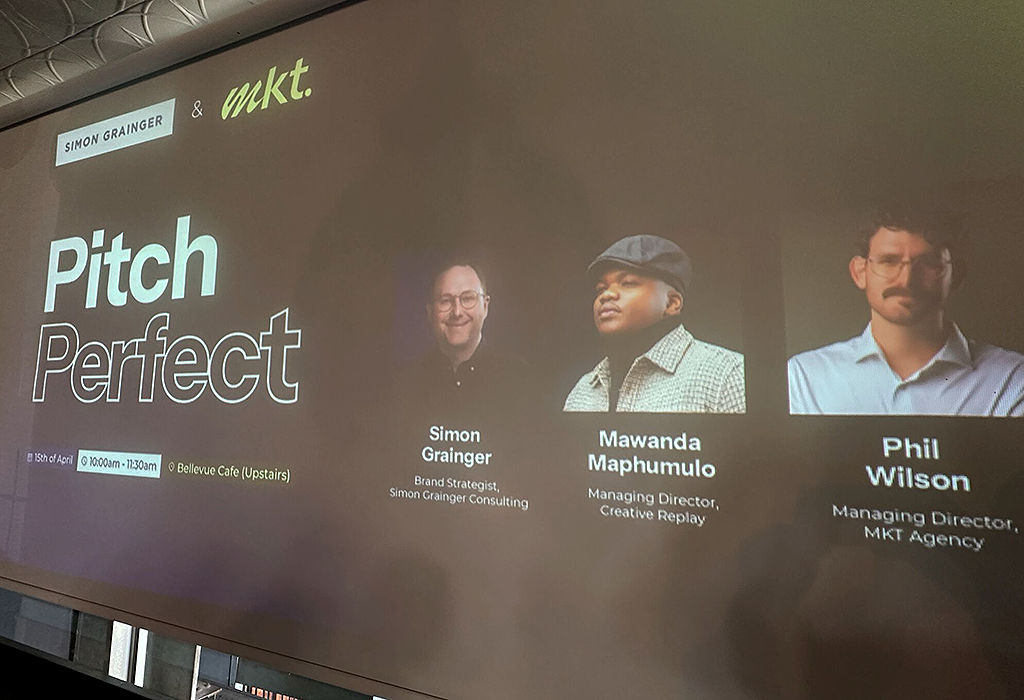
On 15 April 2026, Tim Africa attended a Pitch Perfect session focused on one of the most misunderstood yet critical business skills: pitching. Hosted by Simon Grainger, Mawanda Maphumalo, and Philip Wilson, and held at the Bellevue Cafe in Kloof, the session unpacked how pitching has evolved beyond presentations into decision-making tools.
They explored how attention is fragmented, trust is harder to earn, and audiences are more informed than ever. This means the way we pitch, whether in a boardroom, on a sales call, or through content, needs to be sharper, more human, and more intentional.
One of our Account Executives, Janelle Vernall, attended the session to capture practical insights that can be applied across marketing, sales, and content creation. What stood out most was how pitching is no longer just about selling an idea. It is about creating clarity, building trust, and guiding decisions in a noisy world.
What is a Professional Pitch?
Simon’s Answer
For Simon Grainger, a pitch is not just a presentation. It’s a structured moment of influence where multiple variables come together. Trust, attention, clarity, and value all need to align for a pitch to land.
He framed pitching as the intersection between what matters to you and what matters to your audience. If that intersection is unclear, the pitch fails. If it’s clear, the pitch becomes powerful.
Mawanda’s Answer
Mawanda Maphumalo had a more personal approach. For him, your perspective is your pitch. The way you think, communicate, and show up in the world is already influencing how people perceive your value.
In a world where audiences are looking for voices they can trust, your pitch extends beyond a meeting. It lives in your content, your personal brand, and your consistency over time.
Philip’s Answer
Philip Wilson defined a pitch as a decision-making tool. It shouldn’t overwhelm or over-explain. Instead, it should make the next step obvious and easy for the client.
A strong pitch removes friction. It simplifies complexity. It answers one core question clearly: what problem are we solving right now, and why does it matter?
Key Takeaways from Simon
1. Clarity Beats Complexity
Simon emphasised that clarity is the most underrated advantage in pitching. The clearer your message, the easier it is for your audience to understand, trust, and act on it.
Overcomplicating your pitch creates friction. When people must work to understand you, they disengage. Simplicity isn’t a lack of depth. It’s a sign of mastery.
2. Storytelling Creates Connection
Good storytelling places the client at the centre of the narrative. They are the hero, not your business.
Stories improve recall and emotional engagement. They make your pitch memorable and human, which is critical in a world where attention is limited.
3. Evidence Builds Credibility
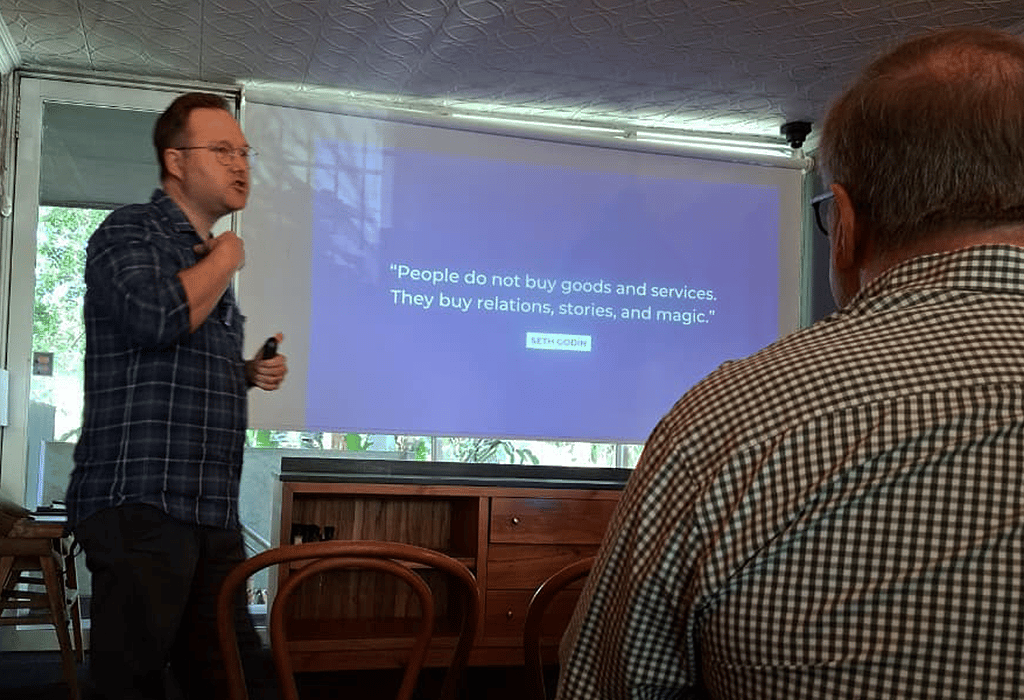
“It’s not what you say it is, it’s what they say it is.”
Simon highlighted the importance of proof. Testimonials, case studies, and real outcomes are what turn claims into credibility. Evidence should not just exist. It should directly support the decision the client needs to make.
Key Takeaways from Mawanda
1. Your Perspective is Your Pitch
Mawanda’s core idea is simple but powerful. You’re already pitching, whether you realise it or not. Every interaction, every post, and every conversation shapes how people perceive your value. Owning your perspective is the first step to building influence.
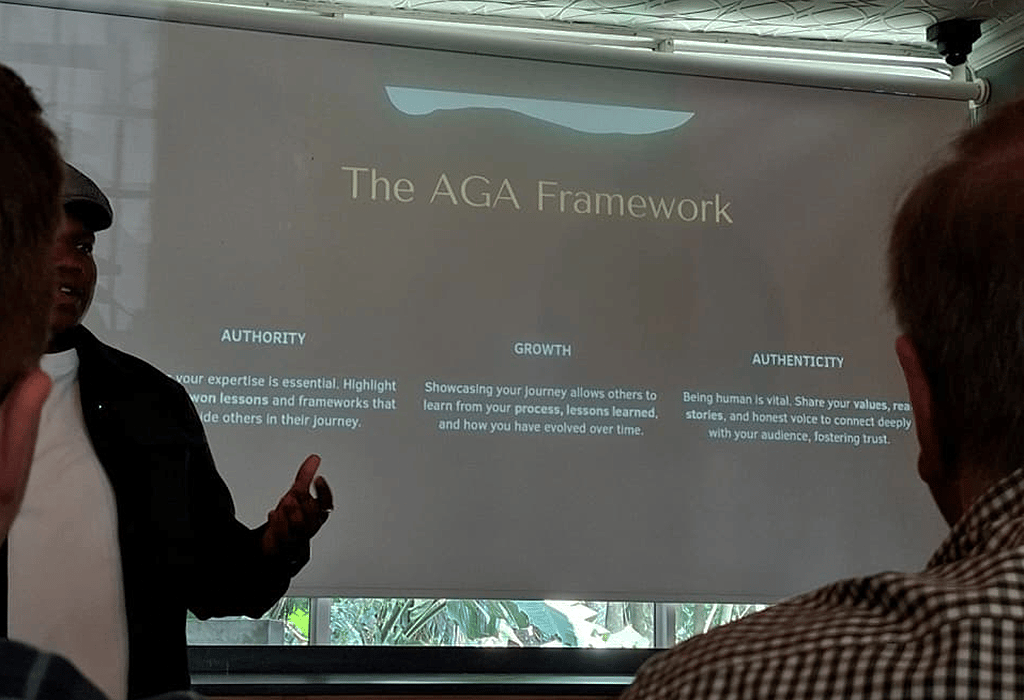
2. The AGA Framework
Mawanda introduced the AGA framework: Authority, Growth, and Authenticity. Together, they create a compelling personal and professional narrative.
Authority is built through sharing hard-won lessons.
Growth is shown through documenting your journey.
Authenticity is what makes everything believable.
3. People Connect with People
In an era of automation and AI, human connection becomes even more valuable. Audiences aren’t just looking for expertise. They are looking for honesty, relatability, and real stories. If your content feels human, it builds trust.
Key Takeaways from Philip
1. Start with the Fundamentals
Philip broke pitching down into 3 core elements: time available, audience structure, and representation.
Understanding how much time you have, who is in the room, and who should present determines how effective your pitch will be. Without this clarity, even strong ideas can fail.
2. Find Your Golden Thread
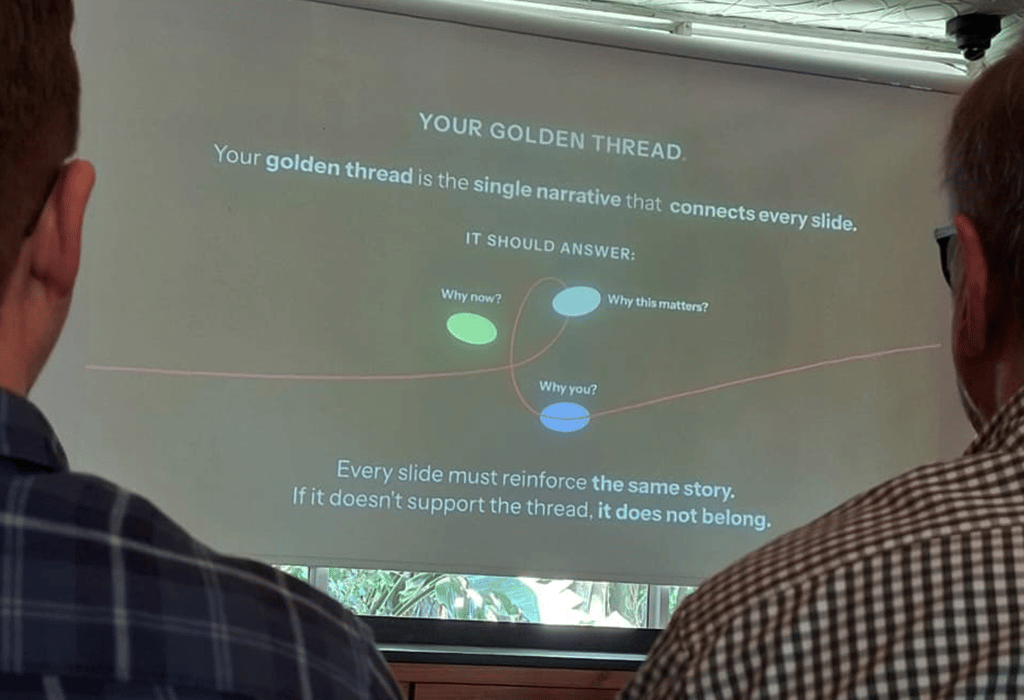
Philip introduced the concept of the “golden thread” as the single narrative that connects every part of your pitch. Every slide, point, and example should reinforce the same core story.
A strong golden thread answers three key questions: why now, why this matters, and why you. If a slide does not support this narrative, it does not belong in the pitch.
3. Refinement Requires Discipline
Philip introduced the idea of mission-critical content versus bloat. Mission-critical content defines the problem, demonstrates capability, provides proof, and enables decision-making. Everything else is unnecessary. If removing a slide does not weaken your case, it should not be there.
Pitch Refinement Checklist:
-
Clear audience understanding
-
Define core issue
-
Consistent golden thread
-
Context-appropriate format
-
Evidence linked to value
-
No unnecessary content
-
Right presenter for the moment

The Future of Pitching
As attention continues to fragment and trust becomes harder to earn, pitching will become more focused, more human, and more evidence driven.
The future belongs to those who can combine clarity, authenticity, and proof into a single narrative. Businesses that master this will not just win more pitches. They will build stronger relationships and longer-term trust with their audiences.
What Tim Africa Walked Away With
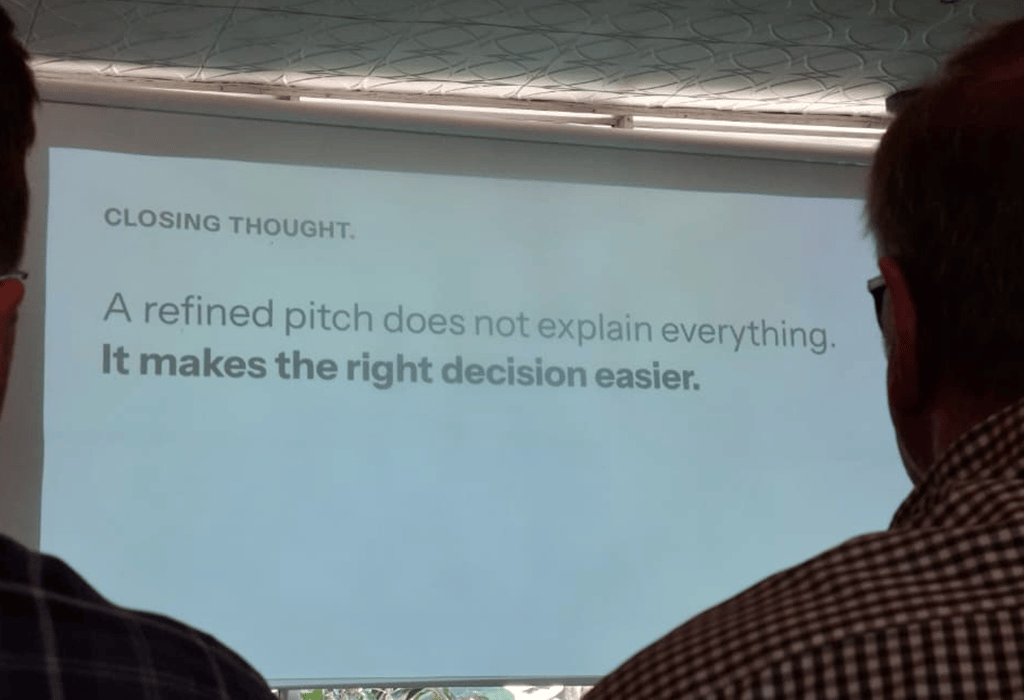
This session reinforced a simple but powerful truth. A refined pitch doesn’t explain everything. It makes the right decision easier. This reinforces the idea that great marketing and great pitching aren’t separate disciplines. They are deeply connected. A strong pitch is simply a compressed version of a strong brand. It reflects how well you understand your audience, how clearly you can articulate value, and how confidently you can guide someone toward a decision.
This is the kind of practical, human-centred thinking that shapes how we help brands communicate. If you’re wanting help turning your concepts or expertise into content, Tim Africa does this every day through podcasting, performance marketing, and web development.
Frequently Asked Questions
- Who is Simon Grainger?
Simon s a brand strategist who helps growth-focused businesses refine their brand with empathy to drive clarity, trust, and commercial impact. His client experience includes Liberty, Mr Price Group, East Coast Radio, Rewardsco, Diageo, Adcock Ingram, and he has shared the TEDx stage.
- Who is Mawanda Maphumalo?
Mawanda is Managing Director of Creative Replay. Over the past 16 years, he’s helped individuals and brands uncover their purpose and amplify their voices through impactful content and strategic communication. From building a community for his dance crew to running a media agency, he’s been on a journey of connecting people with meaningful stories that inspire action.
- Who is Philip Wilson?
Philip is Managing Director of Mkt Agency, a boutique strategy and communications business that drives the conversation on behalf of clients around the world. With a background in both journalism and through-the-line communication, he has worked with local brands including Unilever, South African Breweries, and Transnet, as well as several international businesses across a range of industries from commodities to agriculture.



Comments