

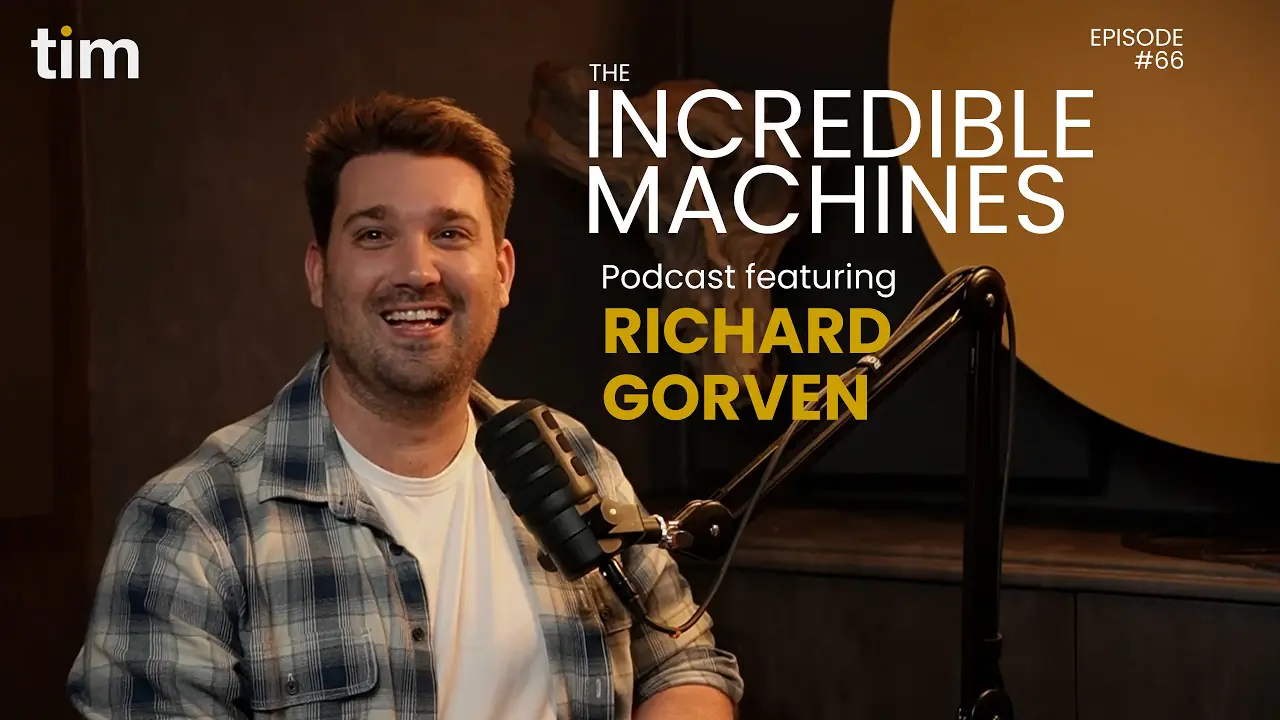
In Episode 66 of The Incredible Machines podcast, hosts Jon Oliff and Luke Holden are joined by Richard Gorven, a filmmaker, creative director and communicator, youth leader for Trulife, and author of the book Before You Call Yourself a Mentor.
His journey into mentorship didn’t begin with a formal title. It grew from years of investing in young people, navigating difficult relationships, learning from his own mistakes, and asking deeper questions about what mentorship requires.
Throughout the episode, Richard explores the importance of boundaries, expectations, self-awareness, and understanding when a mentorship relationship needs to change. He also introduces the idea of unreasonable mentorship and explains why unexpected acts of genuine care can sometimes create the greatest impact. His central belief is simple, but demanding mentorship isn’t a title to claim. It’s a mantle that carries responsibility.
Whether you’re mentoring somebody, looking for a mentor or simply trying to become a more intentional leader, this conversation challenges many of the assumptions we make about helping other people grow.
Key Highlights from Richard Gorven in Episode 66
1. The Five Phases of Mentorship
Richard breaks mentorship into five phases:
The spark is the initial connection between two people. Initiation is where trust and expectations begin to form. Cultivation is the period most people traditionally associate with mentorship, where the relationship is active and growth is taking place.
Richard believes the final two phases are often overlooked.
Eventually, mentorship relationships change. Sometimes the person no longer needs the same type of guidance. Sometimes another mentor is better suited to the next chapter. Instead of seeing separation as failure, Richard argues that it can be evidence that the relationship has done what it was meant to do.
2. Unreasonable Mentorship Creates Unexpected Connection
For Richard, this represents unreasonable mentorship: doing something beyond what somebody expects in a way that communicates genuine care.
The point is not to ignore boundaries. It is to understand when thoughtful, responsible, and unexpected actions can create trust that conventional approaches may never achieve.
3. Mentorship Doesn’t Have to Look the Same for Everyone
He pushes back against the idea that mentorship needs to follow one strict structure.
Some mentorship relationships may involve regular meetings. Others might exist for only one season. Sometimes mentorship can even happen through individual moments that leave a lasting impact.
Toward the end of the episode, Richard encourages people not to become overly focused on what mentorship is supposed to look like. Instead, the relationship should respond to the people involved, the season they are in, and what is genuinely needed at that moment.
4. Mentorship Is a Mantle, Not a Title
One of the central ideas in this episode is that mentorship shouldn’t become another label people attach to themselves.
A title can be claimed. A mantle carries weight.
Richard believes the strongest mentors aren’t focused on proving that they’re mentors. They’re focused on whether they’re genuinely serving the person in front of them.
"I think the fruit of great mentorship is a great relationship."
"Well, I couldn’t speak his language I couldn’t even understand a word.
But I knew the meaning was what I decided I had heard"
Advertising Campaign Mentioned
MTN Cheese Boy Campaign: Richard highlights the MTN Cheese Boy commercial as an example of advertising that captures the tension between traditional and modern African identity while showing how technology can create connection between people from different worlds. He describes the campaign as a powerful example of communicating complex cultural ideas in a simple and emotionally effective way.
Watch the MTN Cheese Boy campaignAllan Gray Mark Lives Campaign: Richard also highlights Allan Gray’s Father’s Share campaign. He admires how the campaign sells the emotional outcome behind the brand rather than focusing solely on the financial product. For him, the campaign demonstrates how marketing can reveal the intention behind somebody’s actions and completely change the audience’s understanding of a character.
Watch the Allan Gray campaignConclusion
Richard Gorven’s approach to mentorship is ultimately less about having the right answers and more about having the right foundations. Before You Call Yourself a Mentor challenges the idea that mentorship is simply another leadership skill to acquire. Instead, Richard presents it as a responsibility rooted in relationships, trust, and genuine care.
Whether you’re rethinking what mentorship really means, learning how to invest in others more intentionally or exploring the role of identity, faith and responsibility in leadership, this episode is a must listen.
Frequently Asked Questions
Richard Gorven is a filmmaker, creative director, youth leader and author of Before You Call Yourself a Mentor. His work is shaped by years of investing in young people and exploring what meaningful mentorship requires, with a strong focus on identity, responsibility, faith, boundaries, and helping people better understand who they are. He also is a Durban-based creative director and communicator, youth leader for Trulife an NPO focused on equipping young people to make better life choices.
Before You Call Yourself a Mentor is Richard Gorven’s book exploring what meaningful mentorship really requires. Rather than focusing only on techniques or formal programmes, the book examines the foundations behind mentorship, including intention, boundaries, expectations, responsibility and the different phases a mentorship relationship can move through. Its central idea is that mentorship is not simply a title to claim, but a mantle that carries the privilege and responsibility of investing in another person’s life.
Richard describes five phases of mentorship: spark, initiation, cultivation, separation, and redefinition. The framework recognises that healthy mentorship relationships naturally evolve over time rather than remaining permanently in the same form.
The Incredible Machines podcast is a thought leadership series produced by Tim Africa, featuring conversations with visionary entrepreneurs, leaders, and changemakers from across the continent.
You can listen on all major platforms including Spotify, Apple Podcasts and the Tim Africa Podcast Hub.