

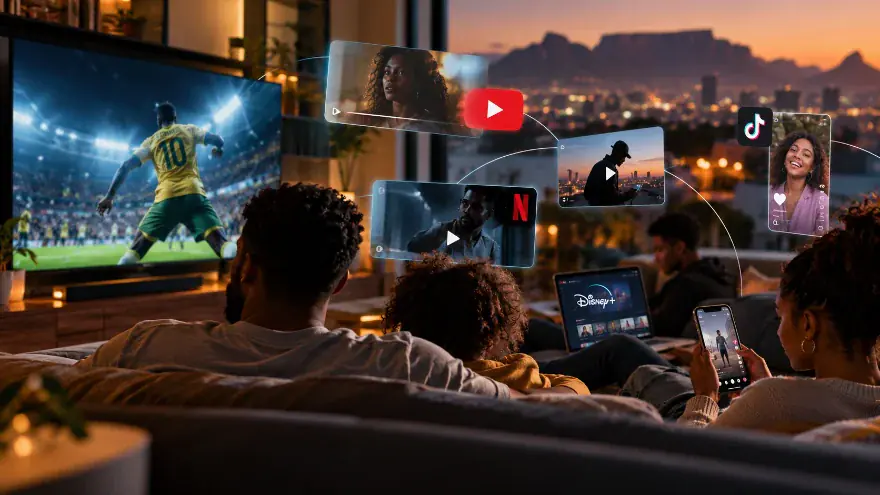
Television sets remain central to many households, but they now exist alongside smartphones, streaming services, YouTube, social media and connected devices. The result isn't the disappearance of television audiences. It's an audience that has become increasingly fragmented.
That was one of the key messages from Gary Whitaker of the Broadcast Research Council of South Africa during the recent IAS Masterclass on the BRC Total Video Measurement Establishment Survey. Janelle Vernall and Khethelo Ntombela from TIM Africa attended the exclusive online session, taking notes throughout, and came away with plenty to think about.
This article outlines how the BRC is moving South Africa towards a new Total Video Measurement system designed to provide a more complete picture of how people consume television and video.
As Whitaker summarised:
“Fragmentation is real. Disappearance is not.”
Why Video Measurement Needs to Change
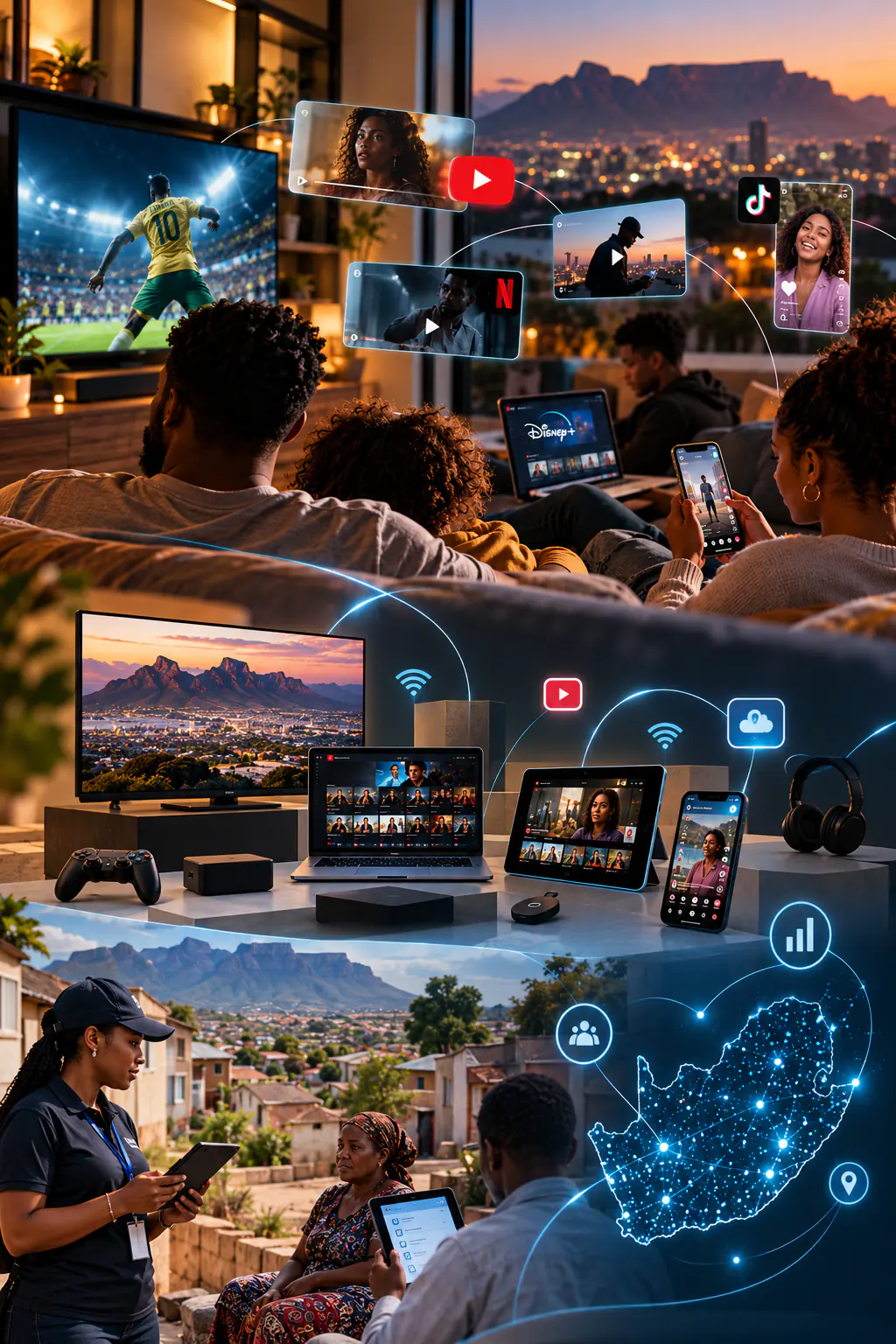
The way South Africans watch content has changed considerably. The challenge is therefore no longer simply measuring a television set. It's measuring audiences across an entire video ecosystem.
The BRC designed its establishment survey specifically around television and video, looking closely at devices, platforms, distribution, access and viewing behaviour.
The study included a representative sample of 15,000 South Africans aged 15 and older, with fieldwork conducted from September 2025 to February 2026. The sample was spread across 5,000 enumeration areas to provide greater geographic representation.
The Big Screen Still Matters
One of the strongest findings is that digital video has not made the television set irrelevant.
68% of South Africans aged 15 and older watched television or video during the previous seven days, while 86% watched their most watched programmes on a television set.
Television also remains an important shared household experience, while streaming is often more individual. 62% of streaming viewers mostly watch alone.
Streaming and Social Video Are Expanding the Audience
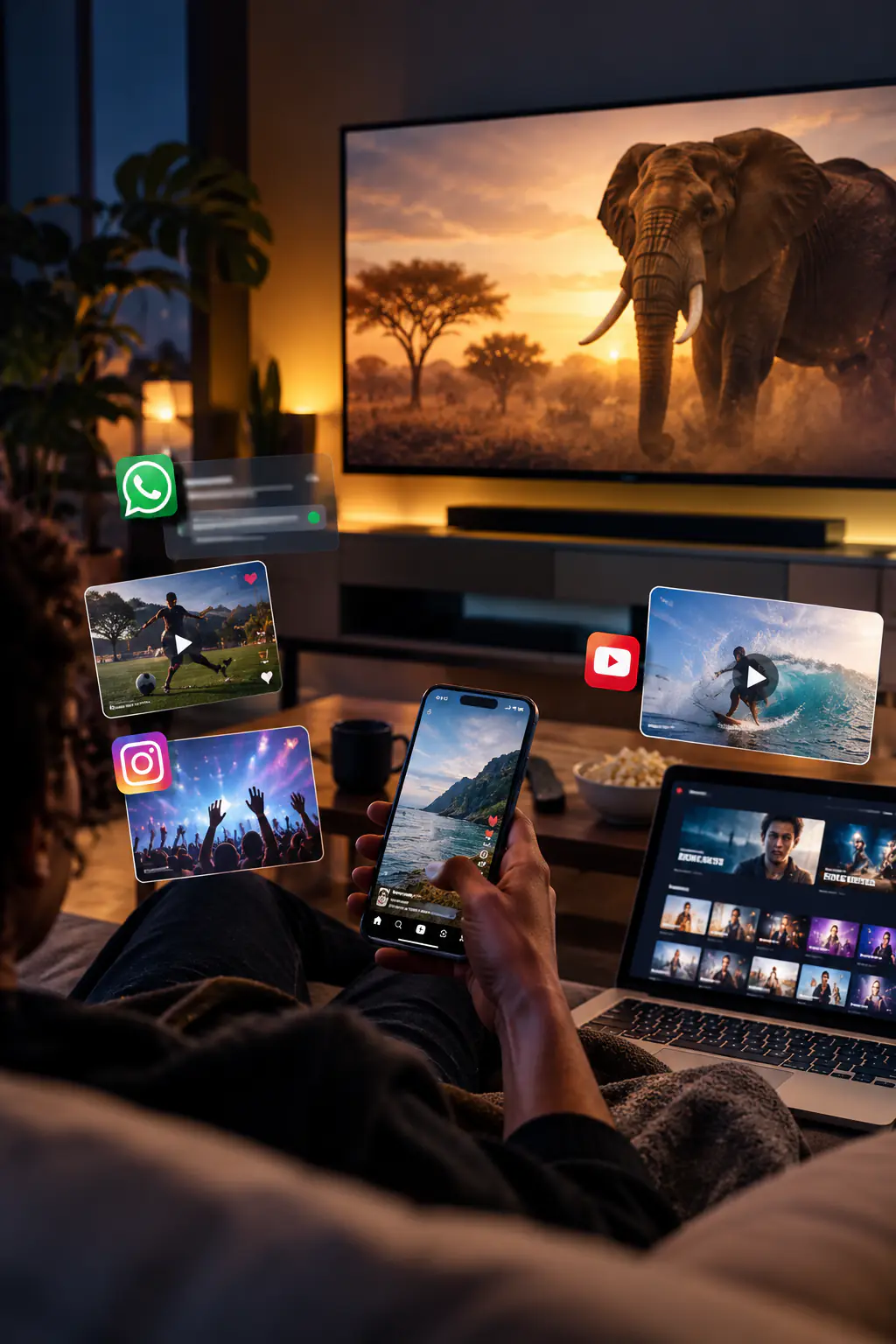
During the Masterclass, Whitaker highlighted the reality of split attention. The television may be playing while viewers simultaneously use WhatsApp, scroll through social media or consume other content on their phones.
For marketers, understanding which screens audiences use is becoming just as important as understanding what they watch.
Digital viewing is now a significant part of South Africa's video landscape. 48% of adults watched at least one streaming service during the previous seven days, while 64% watched YouTube free. Social video is also widespread, with 70% of television and video viewers using social media video during the same period. Mobile plays a particularly important role, with 69% of streamers using a mobile phone. But these behaviours often happen alongside traditional television rather than replacing it.
Convenience Is Driving Streaming
An interesting finding from the survey was why South Africans pay for streaming.
44% pay because streaming allows them to watch according to their own schedule. 30% pay for variety, while 18% pay to avoid advertising.
The biggest benefit is therefore not necessarily exclusive content. It is control over time.
Connectivity Still Shapes What South Africans Can Watch
While connectivity is expanding, access remains uneven. 67% of homes have some form of internet access and 92% have a working mobile phone. However, 39% rely on mobile data and only 16% have fibre.
Power reliability also influences viewing. 69% of connected broadcast homes lose viewing during load shedding or load reduction, while 23% of homes have no internet available at all.
South Africa Has a 39.5 Million Total Video Universe
The research estimates South Africa’s total video universe by combining audiences across television and online video. This includes a television universe of approximately 28.3 million people and an online video universe of approximately 34 million, with the overlap between the two accounted for rather than simply adding the figures together.
This led to perhaps the strongest observation from the Masterclass:
“We didn't lose the audience. We lost sight of how they were watching.”
What This Means for Advertisers
For advertisers and agencies, Total Video Measurement will provide a more integrated view of how target audiences consume video across different screens and platforms.
The system will expand beyond linear television to include connected TVs, other devices, and in home and out of home viewing, with participating broadcasters eventually contributing streaming data.
Platforms such as YouTube, Netflix and Disney will initially be measured at platform level, with limited insight into the specific content audiences are watching.
A TIM Africa Perspective
As South Africa moves towards Total Video Measurement, the challenge for brands will be to think beyond television versus digital. The focus should be on the audience, how they move between screens and how each piece of content contributes to the wider journey.
At TIM Africa, that is the opportunity we see: using better audience intelligence to create connected content and performance strategies that follow people rather than platforms.